Mobile-measurement platforms (MMPs) like Branch, AppsFlyer and Adjust are powerful — they do install attribution, SKAN, ad-network postbacks and fraud detection, with deep linking bundled in. But they're also heavy to adopt and priced for scale. If your actual need is "make links open the app on the right screen and tell me how they perform," you may not need an MMP at all. Here's how to decide.
When you genuinely need an MMP
- You run paid user-acquisition and must attribute installs to ad networks.
- You need SKAN / SKAdNetwork conversion modeling on iOS.
- You need ad-network postbacks, fraud detection, and a native SDK in the app.
If that's you, an MMP is the right tool — attribution is genuinely hard and worth paying for.
When you don't
- You want emails, referrals, QR codes and social links to open your app on the right screen.
- You want an app-store fallback and deferred deep linking so no tap dead-ends.
- You want analytics on those links and a developer API — without an SDK or per-install fees.
That's the deep-linking layer, and you can have it without the full MMP overhead.
The lighter alternative: lynkily Deep Links
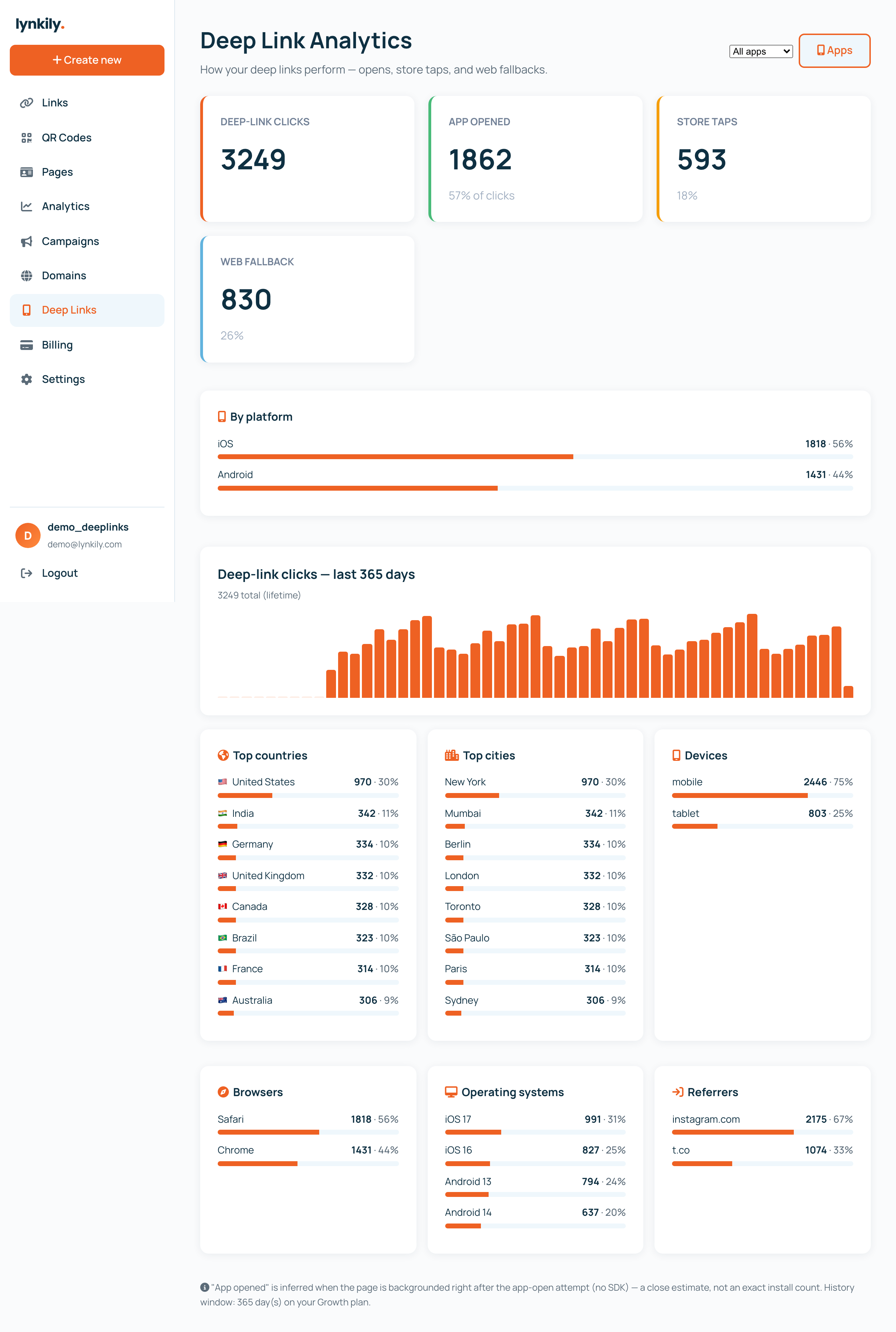
lynkily Deep Links focuses on exactly that layer: iOS Universal Links and Android App Links (association files hosted for you), smart app → store → web routing, deferred deep linking via a REST endpoint (no SDK), a deep-link analytics funnel, and a developer API with keys and webhooks — at flat pricing, free to start.
You can always add attribution later
Starting with a focused deep-linking tool doesn't lock you in. Many teams run deep links through lynkily and only adopt a full MMP if and when paid-UA attribution becomes a priority. Start where your need actually is.
Related reading: what is deep linking, deferred deep linking without an SDK, and our linkrunner alternative comparison.